



In this article:
- What Changed Since Last Year: From Panic to Pragmatism
- Platforms and Genres: PC Returns, Mobile Dominates
- Stylization vs Photorealism: The Choice That Defines Budget
- Web3 and Blockchain: From Hype to Substance
- Artificial Intelligence: From Buzzword to Production Tool
- Technical Stack: Unreal, Unity, and New Tools
- Live Ops and Content Updates: Art Doesn't End After Release
- Collaboration and Communication: How Not to Fail Remotely
- What to Expect in 2026: Predictions and Hopes
- Building Games in the New Reality
Looking at the gaming market at the end of 2025, you understand that the industry is in a strange position between optimism and exhaustion. Analysts predict market growth, mainly due to the PC and mobile segments. But every week there is news of layoffs, studio closures and canceled projects. During this turbulence, game art outsourcing shifts from convenient option to survival strategy — a way to keep creating without burning through resources.
Meanwhile, 2025 delivered some genuinely dramatic moments. AdHoc Studio (made up of Telltale Games veterans) surprised everyone with Dispatch — a superhero workplace comedy with strategy mechanics that dropped episodically in October-November, reminding us of Tales from the Borderlands’ best days.
So it’s clear that even small teams can do revolutionary things when they allocate resources wisely. Let’s take a look at what underlies success for game developers.
What Changed Since Last Year: From Panic to Pragmatism
The year 2025 has shown a real picture of the use of AI and its acceptance by the public. Most developers, and even more so designers, are cautious about using it in their work. Ethical issues, intellectual property issues, and threats of public condemnation have forced many people to stop mindlessly generating everything they can. Larian Studios got harsh criticism for overly optimistic genAI comments, reminding everyone that when it comes to art and authorship, caution works better.
At the same time, AI tools themselves became noticeably more useful for routine work — automated UV unwrapping, texture enhancement, generating intermediate animation frames. The problem isn’t the tech itself, but how people apply it. Companies using generative AI instead of humans to create final assets got results that looked… wrong. Those using AI as an assistant for artists accelerated the process without quality loss.
Meanwhile, traditional 3D game art outsourcing remains the production backbone for most studios. Proven companies with complete pipelines — from concept art through modeling and texturing to rigging and export — provide the predictability that’s so lacking in uncertain times. Kevuru Games, for instance, worked with Epic Games on Fortnite, with Lucasfilm on Star Wars VR, with Housemarque — creating characters, weapons, environments for AAA and indie projects. Studios have realized that it is more profitable and reputationally safer to turn to professional game designers, and thoughtless content generation will not bring profits or improve results.
Platforms and Genres: PC Returns, Mobile Dominates
Steam Deck proved that portable PC gaming has a future, and Steam itself released over 19,000 games in a year — though nearly half collected fewer than 10 reviews. Competition got fiercer than ever. To break through this noise, you need visual quality — people scroll Steam Next Fest for hours, deciding whether a game interests them in 3-5 seconds. Graphics don’t decide everything, but it’s the first thing players see.
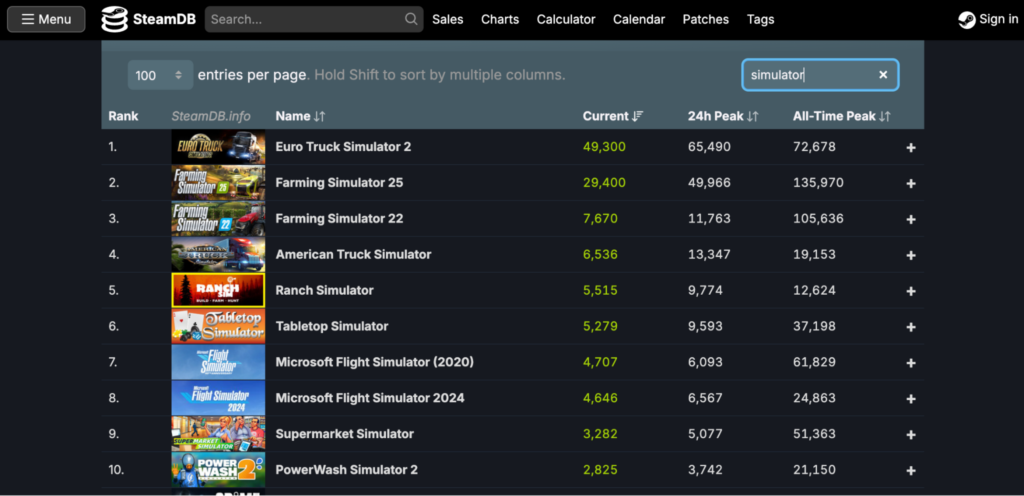
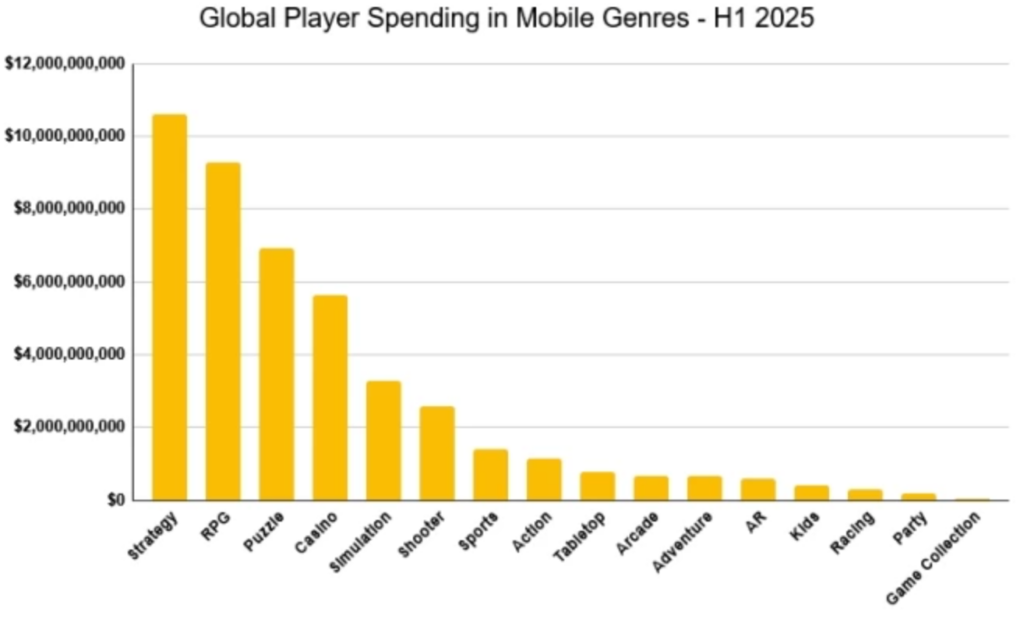
Over 50% of 3.3 billion players worldwide game on mobile devices, and the mobile segment continues dominating revenue. Simulators and puzzles lead downloads.
You Deserve Better Clients...
We can help you find them. Just send us the details and we'll hunt down leads that match your business needs. All on autopilot.
But RPGs and strategies with gacha mechanics bring in the most money.
Source: pocketgamer.biz
The most interesting trend — crossplatform F2P games like Genshin Impact, blurring boundaries between mobile, PC, and consoles. Creating such a project alone — impossible. You need teams of 3D artists for characters, animators for combat, environment designers for massive open worlds. And all this must work on iPhone, Steam Deck, and PS5. Outsourcing divides the load, letting internal teams focus on gameplay and economy while handing visuals to specialists.
Stylization vs Photorealism: The Choice That Defines Budget
Even in 2026, no universal answer exists for “which style to choose.” AAA studios can afford hyperrealistic models with millions of polygons and 4K textures, but the price — years of development and tens of millions of dollars. Even Call of Duty: Black Ops 7 showed the series’ weakest launch in recent years, despite all invested resources. Players tire of template blockbusters that look identical. Maybe that’s why stylized projects surge again.
Look at Dispatch — its aesthetic recalls comics and Invincible, bright, readable, and won’t look dated three years post-release. Schedule I, Arc Raiders, other AA and indie titles on Steam also bet on stylization — and win. They need less post-processing, render faster, optimize easier for weaker hardware. Most importantly — they have identity. When you see a screenshot, you immediately know what game it is.
Web3 and Blockchain: From Hype to Substance
The Web3 gaming market crossed from niche to mainstream in 2025, projected to surge from $33.7 billion in 2025 to over $184 billion by 2035 at 18.5% CAGR. But here’s what changed — nobody talks about “play-to-earn” as the main selling point anymore. Gunz (formerly Off the Grid), developed by Gunzilla Games with 450+ full-time developers, competes directly with Warzone and Fortnite. What makes it special isn’t blockchain features screaming at you — it’s that you can play normally, and blockchain exists for those who want to collect, trade, and earn through NFTs.
Over 80 NFT collections integrate into games like Nifty Island — Pudgy Penguins, Bored Ape Yacht Club, Lazy Lions as playable avatars. The shift moved from “blockchain game” to “game that happens to use blockchain.” Illuvium delivers an AAA creature-collection RPG with Unreal Engine graphics and advanced auto-battler mechanics, built on Ethereum/Immutable X. Players aren’t thinking about smart contracts — they’re catching creatures and battling.
Creating blockchain games requires specific expertise — smart contract integration, wallet systems, NFT minting, token economies. Most studios don’t have these specialists on staff, nor should they. You can spend months hiring and training blockchain developers, or partner with teams who’ve already shipped Web3 projects.
Artificial Intelligence: From Buzzword to Production Tool
What shifted — AI moved from experimental to production-critical. Unity AI provides contextual assistance, automates tedious tasks, generates assets directly within Unity Editor. Unreal Engine integrates AI-powered optimization and automated testing. These aren’t add-ons — they’re core features.
Tools like Promethean AI and Scenario revolutionize environment and asset creation. Promethean AI learns from artist style and preferences, suggesting elements and arrangements based on natural language descriptions. Instead of manually placing every tree, rock, and building, artists describe the scene — “post-apocalyptic city block with overgrown vegetation” — and AI generates a complete environment that gets refined through further instructions. This workflow cuts scene blocking time by 60-80%, letting artists focus on unique creative touches.
Scenario specializes in training custom AI models on specific art styles to generate consistent 3D assets. Perfect for maintaining visual coherence across large projects. Layer AI does similar work, ensuring everything from trees to buildings follows established style guides. Meshy AI generates high-quality 3D models from text descriptions in minutes. What once took artists days now happens in hours — not replacing artists, but handling grunt work so they tackle creative challenges.
But AI without human oversight creates problems. Corey Wilton from Mirai Labs warned against using AI merely as buzzword: “What matters is creating experiences previously impossible without AI.” Studios leveraging AI to push boundaries could usher in new gaming eras. AI analyzing player behavior unlocks personalized recommendations and dynamic interactions. Fully on-chain games and autonomous worlds become possible when AI handles complexity humans can’t manage at scale.
Technical Stack: Unreal, Unity, and New Tools
The “Unreal vs Unity” debate finally lost its edge in 2025. Unreal Engine 5 with Nanite and Lumen set new visual standards for AAA, while Unity simply… remains popular for mobile and indie. Most studios now use both engines depending on project. Open world with dynamic lighting — UE5. Mobile runner — Unity. Main question isn’t “which engine to choose,” but “can we find artists who understand its specifics?”
Outsourcing studios maintain dual competency: both Unreal and Unity, plus all supporting tools. Autodesk Maya, 3ds Max, Blender for modeling. ZBrush for sculpting. Substance Painter for texturing. Houdini for procedural generation. Marvelous Designer for clothing. Motion capture and hand animation. This isn’t just drawing on tablets — it’s engineering. When a studio says “we work on UE5,” they mean not just FBX export, but LOD optimization, material setup for physically-based rendering, writing Blueprint logic for interactive objects.
Live Ops and Content Updates: Art Doesn’t End After Release
If you’re not planning live ops, you’re planning early player churn. Fortnite, PUBG Mobile, Candy Crush don’t just survive release — they thrive through continuous content updates. Seasonal events, new skins, brand and media franchise collaborations. Something new every week. For art teams, this means constant flow of new models, textures, animations. Internal teams physically can’t sustain this pace without burnout.
For startups, live ops present a different set of challenges. You just launched your game, it starts gaining traction, but you already need new character for Halloween, new biome for winter, new boss for spring update. If you built art pipeline on internal team of 2-3 artists, you simply won’t keep up. Outsourcing lets you scale quickly — need 10 new weapons in a month? Take external team on short contract. Need to update all characters for new graphics tech? Same thing.
Collaboration and Communication: How Not to Fail Remotely
Biggest mistake outsourcing game art — thinking you can just drop technical specs and receive perfect results. Reality’s more complex. Even the most experienced studio needs context: what’s this game, who’s the target audience, what are engine constraints, how does other project content look. Without this, you get technically correct models that don’t fit the game’s visual language.
Important things for successful collaboration:
- Clear references and style guides. Not “make something cool,” but specific examples, mood boards, technical requirements.
- Regular syncs and feedback. Weekly progress reviews, comments in early stages, not after modeling finishes.
- Understanding constraints. If the game must run on mobile, can’t demand models with million triangles.
- Consider time zones. If studio’s in Poland or Ukraine and you’re in California — plan meetings so someone’s not working at 3 AM or agree on this in advance.
What to Expect in 2026: Predictions and Hopes
Half of all developers self-fund their games. Independent developers keep the industry afloat, but without access to venture capital and big budgets, they must be extraordinarily inventive. Outsourcing for them isn’t luxury — it’s necessity. Can spend a year searching, hiring, and training internal art team, or find proven studio in a month and get ready assets in a quarter.
Expect growing demand for stylized and AA projects. AA and indie games like Schedule I, Arc Raiders, REPO, and Dune: Awakening showed strong representation in top-10 PC releases by revenue. Signal: don’t need to be Electronic Arts or Ubisoft to make successful projects. Need strong idea, clear visual language, and technical quality.
The web3 gaming market will continue maturing. Infrastructure consolidation, seamless Web3 integration, AI-powered personalization, enhanced interoperability. Juan Allen from OLA GG highlighted challenges facing traditional esports: “Fans feel disconnected, and leagues are controlled by game developers. Web3 offers shared ownership and decentralized governance.” Blockchain gaming’s expanding footprint in South America, Middle East, and Africa signals growth. But creating these experiences requires specialized knowledge most teams don’t have in-house.
AI will keep transforming workflows, but human creativity remains irreplaceable. The winning formula — AI handles repetitive tasks, humans make creative decisions. Outsourcing partners who master this balance deliver both efficiency and artistry.
Building Games in the New Reality
In 2026, game art outsourcing isn’t about lacking competence or trying to save money. It’s about understanding your strengths and delegating rest to professionals. The gaming industry hits record $197 billion, but competition has never been fiercer. Steam releases 52 games daily. Mobile stores overflow with thousands of new titles weekly. Breaking through requires not just good gameplay — you need professional visuals, technical polish, and smart resource management.
Looking at industry trends becomes clear that isolated development doesn’t work anymore. In a world where gaming industry reaches unprecedented heights but individual success never felt harder to achieve, strategic partnerships might be the difference between game remembered for years and another forgotten title in Steam’s endless catalog.
One more thing...
You didn't start freelancing to spend hours every week searching through job boards. You started freelancing to do more work you enjoy! Here at SolidGigs, we want to help you spend less time hunting and more time doing work you love.
Our team of "Gig Hunters"—together with the power of A.I.—sends you high-quality leads every weekday on autopilot. You can learn more or sign up here. Happy Freelancing!