




In this article:
- Highlights:
- What is a freelancer co-op?
- Co-op or solo freelance? What’s the difference?
- Real freelancing co-ops
- Pros and cons of joining a freelancer co-op
- Pros and cons of going solo as a freelancer
- More helpful tools for freelancers
- Wrap up
- FAQs: Co-op or solo freelance
As a content writer and freelance coach, I’m always hunting for tools my clients and I can use to grow and support our businesses.
And trust me, I’ve been down the rabbit hole and tested a lot of options.
If you’re anything like me, you also take your work as a freelancer very seriously. You want high-value leads, efficient processes, and long-term clients you adore working with.
The fantastic thing about our day and age is that we have endless access to resources that can help us thrive as freelancers. One of these options is freelancing co-ops. Some of these are pretty robust, while others give basic tools. Either way, there’s something out there for everyone.
(It just depends on what you’re looking for and what your personal goals are.)
Keep reading to learn more about freelancer co-ops versus going solo, along with some options you can try. I’m also sharing some of the pros and cons of using these resources versus doing it alone.
Let’s take a look!
Highlights:
- Co-ops give freelancers shared resources, community, and sometimes benefits or tools.
- Informal co-ops = simple groups or tools.
- Formal co-ops = legal entities with dues and structure.
- Pros: Stability, shared admin, learning, discounts, stronger brand.
- Cons: Slower decisions, revenue sharing, conflicts, membership costs, challenges of freelance finances
- Solo pros and cons = freedom, higher rates, and direct clients — but full responsibility for admin, legal, and healthcare.
What is a freelancer co-op?
A freelancer co-op (or cooperative) is typically a group of independent workers who pool their resources to make freelancing more sustainable and less isolating.
You Deserve Better Clients...
We can help you find them. Just send us the details and we'll hunt down leads that match your business needs. All on autopilot.
Here’s one called the Freelancer Guilded Cooperative, which I’ll talk about more below:
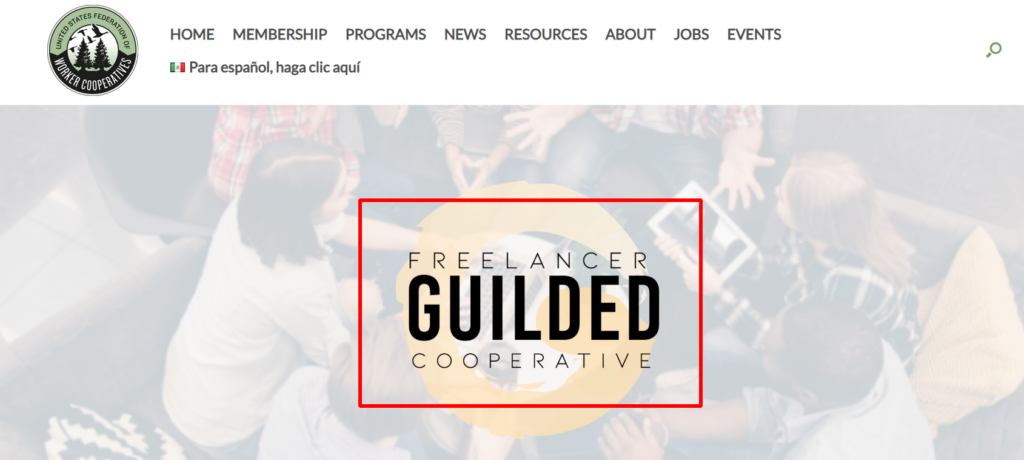
Freelancing co-ops may also lean on trade unions for extra support. (Union representatives might help make sure contracts are fair or point you to benefits like healthcare or retirement planning.)
Depending on the structure, a co-op might help members with things like:
- Community and advocacy: Giving freelancers a sense of solidarity, collective bargaining power, and a network of peers.
- Benefits: Sometimes offering group health insurance, retirement plans, or shared tools/software.
- Taxes and admin: Guidance or services for filing taxes, invoicing, or bookkeeping.
- Contracts and legal support: Templates, advice, or even legal representation.
- Finding work: Shared job boards, referrals, or pooled client contracts.
Some are very formal (like a worker-owned business entity).
But there are also more informal collectives, platforms, or associations. Let’s look at this below. 👇
Types of freelancer co-ops: Formal and informal options
On the informal end, a freelancer co-op or collective might be as simple as:
- A team offering software or tools that automate job searching, contracting, or invoicing for freelancers.
- Occasional meetups or workshops where members trade advice.
- A newsletter that sends out job opportunities or client referrals.
- A shared job board or Google Sheet with open projects.
- A Slack or Discord group where people share leads.
- A job search platform with resources for freelancers.
Here’s one called Freelancing Females, that I’ll touch on more in a bit:
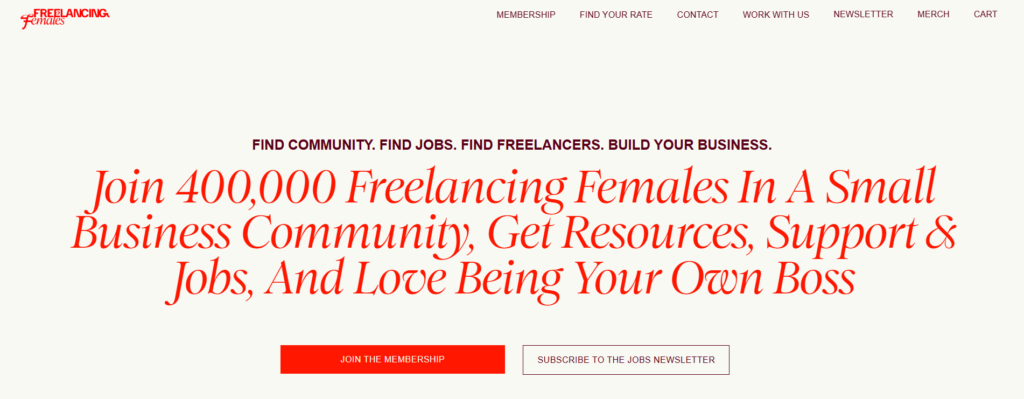
These groups don’t usually have a legal business entity behind them.
It’s more about community or offering some kind of freelancing support.
On the formal end, a co-op could be incorporated as a legal cooperative or worker-owned company.
In that case, members pay dues and participate in voting on decisions. And the co-op may handle things like:
- Providing benefits (like healthcare, retirement, or liability insurance).
- Negotiating contracts.
- Invoicing clients.
Look at my comparison table below for a quick summary on this.
Quick comparison table: Informal versus formal freelancer collective
Here’s an easy overview you can reference on the differences between an informal and formal freelancer co-op.
| Type: | Informal Freelancer Collective | Formal Freelancer Co-op (Worker-Owned Entity) |
| Structure | Loose group, often online (Slack channel, Discord, newsletter, shared board) | Legally registered cooperative or business |
| Membership | Open or invite-only, usually free or low-cost | Members buy in or pay dues, share ownership |
| Decision-making | Admins/moderators decide | Democratic (one member = one vote) |
| Services | Job board, referrals, community advice, newsletters, a list of clients hiring freelancers | Invoicing, tax help, legal support, benefits (health, retirement, insurance), and training |
| Work Opportunities | Shared leads, referrals, freelance gigs | Sometimes contracts with clients under co-op name, distributed to members, and access to startup founders for ongoing work |
| Support | Peer support group, networking, mentorship | Professional support, pooled resources, formal protections |
| Formality | Minimal legal or financial obligations | Requires legal structure, financial transparency, governance |
| Main Benefit | Community and shared opportunities | Stability, collective bargaining, access to benefits, legal protections |
Co-op or solo freelance? What’s the difference?
A co-op shares resources, support, and sometimes clients. Members may gain access to benefits, tools, and administrative support while maintaining their independence.
Some co-ops also offer legal protection:
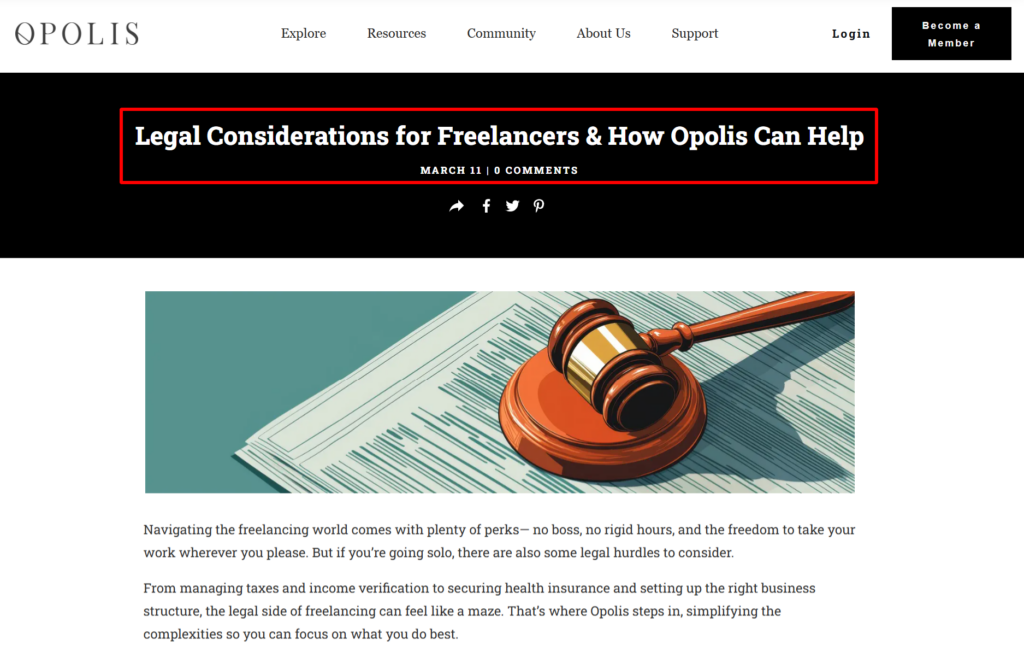
Choosing to go solo, on the other hand, gives you complete freedom to run your freelance business as you see fit.
(You’re responsible for managing everything independently.) If you’re hyper-independent, like me, you’ll likely choose this route. But you can still benefit from less formal co-ops that offer job boards or automated lead sourcing.
Real freelancing co-ops
Co-ops aren’t always easy to find when doing a Google search. Many of them are buried in email invites or talked about behind the scenes by invite only.
Here are three formal freelancing co-ops I’ve come across to give you an idea of what’s out there:
Guilded
Guilded is a US-based service co-op that helps freelancers with contracts, invoicing, tax prep, and healthcare access. Its mission is to reduce wage theft and late payments, while offering benefits that are closer to those of traditional employment.
Smart.coop
This is a European cooperative that gives freelancers employee-like protections. Members can access health insurance and administrative support while keeping the freedom to choose their projects.
And since the cooperative itself employs you, you receive a minimum salary, even if your clients haven’t paid their bills.
Opolis
Opolis is a US member-owned employment platform for independent workers. It provides freelancers with W-2s, pay stubs, tax withholding, health benefits, and retirement savings.
Below, you’ll find informal freelancing co-ops.
Though again, co-op is a loose term, since they’re mostly simple communities or tools supporting freelancers:
SolidGigs
SolidGigs is a lead generation tool that helps freelancers find better clients without spending hours hunting for leads.
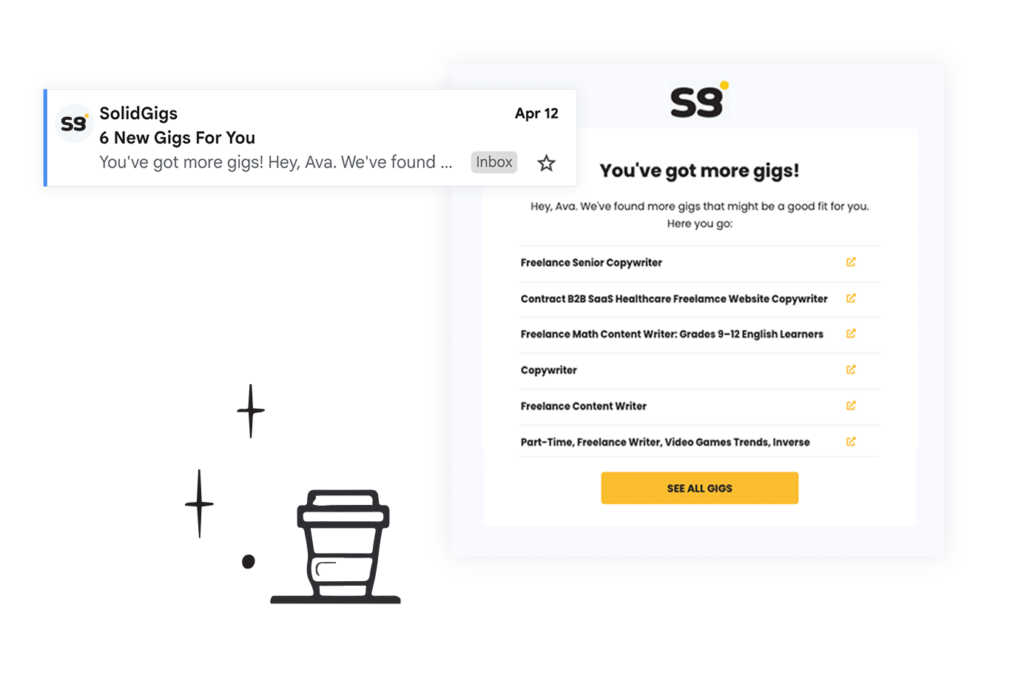
You set your search preferences, and the team and AI tools send you curated opportunities straight to your inbox. (Unlike many formal co-ops, there’s no percentage taken from your paychecks. You just pay for a simple monthly or annual subscription.)
Freelancing Females
This freelancing membership community offers member chat rooms, private job boards, networking opportunities, and members-only workshops.
Members also get discounts on tools and resources to grow their freelance business, all within a supportive network of peers. You can also sign up for their email list to receive job sheets and other work resources.
Remote Rocketship
Remote Rocketship is a paid job search platform that curates remote jobs worldwide. You can filter by country, job type, and experience level to find roles that fit your skills. These include remote gigs for freelancers and permanent positions.
Pros and cons of joining a freelancer co-op
The benefits and tradeoffs of joining a freelancer co-op vary by worker. Again, it’s going to depend on your personal goals as a freelancer.
Here’s what to consider.
Pros
Here are some of the top pros I think are worth paying attention to if you’re considering a co-op:
Shared stability
If one person has a slow month or drops off a project, the co‑op may help buffer that loss. For instance, they may offer pooled income or cross‑cover for urgent deadlines.
It’s the “someone else has your back” effect.
Shared back‑office functions
Some co-ops provide assistance with legal, financial, tax, bookkeeping, contract, marketing, sales, and client referral services. If you solo all of these, you’ll spend non‑billable time when you could be working on more paid projects.
In a co‑op, these can be split or one person specializes — or it’s handled as a shared cost.
Shared learning
Some co-ops offer peer learning, critiques, and knowledge sharing. Members may also share templates, workflows, and problem-solving best practices.

Shared tools
You may have access to shared purchasing power, like software discounts, hardware, or office/coworking facilities, if applicable. In less formal co-ops, you’ll have access to platforms that can help you find more leads and customers.
Shared brand power
A formal co-op can help you build a joint reputation and trust with your audience. This may lead to more or bigger contracts and lower friction in client acquisition. Plus, referrals among members.
Cons
Here’s what to look out for. (Cons vary depending on the specific co-op or platform you’re choosing.)
Collective decisions may slow you down
If there’s a need for governance structures, bylaws, voting, or conflict resolution, it can affect your freelance business (whether you’re a freelance writer or graphic designer). If these are weak, resentment or dysfunction can grow.
Revenue may be lower if you share earnings
Revenue sharing in a formal co-op may result in lower individual earnings compared to operating solo. (Especially on bigger or higher-paid project work.) Sometimes, profit depends on collective performance and cash flow, meaning you may have to wait longer to see legit revenue.
Also, the question of “how much each member should get,” can be a sticky one …
Make sure payment metrics are clear. (Effort, hours, sales, project types, risk, seniority, etc.) Otherwise, you may find their payouts unfair.
A mismatch in priorities
As co-ops grow, aligning what motivates individuals (such as earnings or autonomy) with what’s good for the group becomes increasingly challenging to navigate.
Some members may want to scale up aggressively. Others might prefer more stability. This can cause misaligned values and tension to seep into your freelance business.
Costs of membership
Some co-ops and tools offer fair membership or subscription fees. But others may not be worth the cost, especially if their jobs or resources don’t help you earn more money. ($15/hr for coding work? Hard pass.)
Legal and financial complexity
Setting up a co-op usually requires a formal business entity. This requires more paperwork than a simple sole proprietorship — registration, compliance, tax filings, and potential liabilities.
Dividing ownership, liability, and intellectual property among members can also get complicated.
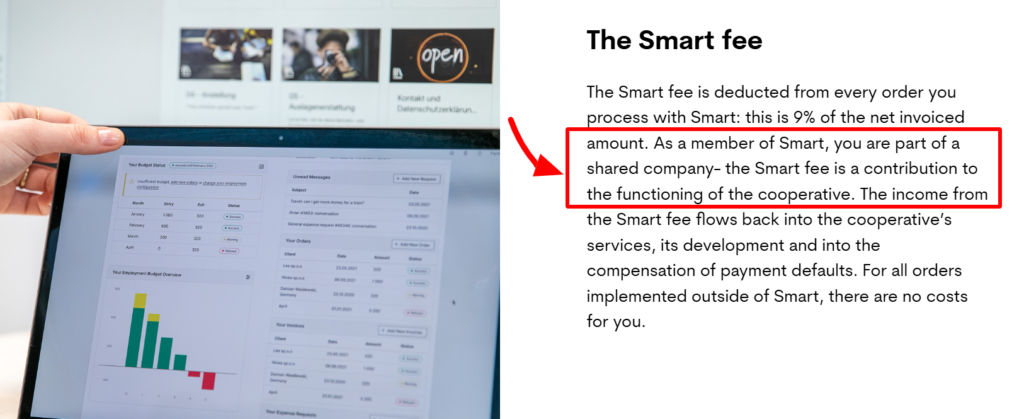
Notice how the Smart Co-op explicitly mentions that you’re part of a shared company as a member:
My advice is to get clear on your freelancing goals, and maybe start with a less formal co-op option, like a lead generation tool or an email newsletter membership. Get a feel for it and then decide if you need more support, like legal help or health benefits. At that point, you can try a more formal option.
Be sure to also speak with your accountant to see if they have any advice about the more formal co-ops.
Pros and cons of going solo as a freelancer
I prefer doing things on my own, with the support of a less formal co-op. (I’m a sucker for a good automated lead generation tool or freelance writing jobs newsletter.)
Here are some of the top pros and cons of getting into the solo game, and maybe opting for less formal “co-ops.”
Pros
Here’s why I love managing my freelance writing business as a six-figure freelancer on my own:
Charge premium prices
You set your rates and keep 100% of what you earn, minus tax. You don’t have to worry about revenue sharing or collective voting on pricing. And if you can deliver high-value work, you can command high-value fees.
Build direct, meaningful relationships with clients
My clients are my world! Going solo means every relationship I manage is mine. There’s no middle layer or shared ownership. You build the trust, and you own the referrals.
Scale to your heart’s content
Unlimited income potential is a major value of mine.
(Whether you want to take on more clients, raise your rates, or start outsourcing parts of your work, you call the shots on how and when to grow.)
Build your own personal, high-value brand
All of your work builds your reputation. Over time, this compounds into a strong personal brand that can attract clients organically. Or even open the door to podcasting, public speaking, or publishing opportunities.
I was featured on three podcasts this past summer, and I didn’t actively seek out these opportunities. They found me after seeing what I’d been cooking up online.

Start your own collective or freelance agency
You’re free to create your own small agency or informal collective later, on your terms, with people you choose. (This can be really fun, btw.)
Cons
I’m including this section to give you a holistic view, but honestly, I feel like the pros outweigh the cons.
You’ll need to weigh these out for yourself, though:
You’re a lone wolf
Everything rests on you, including client delivery, marketing, admin, sales, and problem-solving.
If you’re not a super independent person, this can feel overwhelming without support. Mental health may also be a concern if you’re someone who thrives when you’re on a team or have like-minded people around you.
Figuring out legal necessities takes time and money
From business registration to contracts and taxes, you’ll be responsible for all of the setup and upkeep. It takes time and money to do this right.
(It also takes forever if you want an LLC or another formal business entity.)
You’ll have to plan for healthcare and retirement on your own
You’ll need to plan and pay for self-employed health insurance, retirement, and sick leave if these are a priority to you.
Other options you might consider include disability insurance, a solo 401(k) plan, and a Health Savings Account (HSA) to help cover medical expenses and reduce taxable income.
It takes time to establish yourself as a dependable professional
Building a reputation as a reliable freelancer takes patience. Without a co-op’s shared credibility, you’ll need to hustle harder at the start. However, use the less formal options to get jobs in your inbox or to browse job boards.
(These are great because they’re already looking for freelancers! No need to convince random people on the web to hire you.)
You may not be protected without the right contract clauses in place
Without clear contract clauses, you may be exposed to non-payment, slow payment, or disputes.
But honestly, just make sure to give your contracts a good look from the top down. Include payment protection clauses or ask for payment upfront to protect yourself.
Keep reading for more helpful freelancing resources.
More helpful tools for freelancers
If you’d like more ways to help yourself as a freelancer (without the support of a formal co-op) check out these resources:
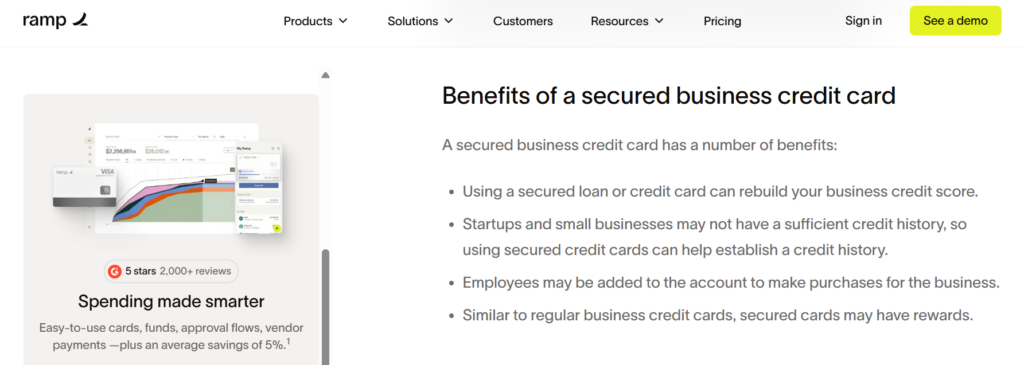
Secured business credit card (Ramp)
It’s often harder to secure freelance finances. If cash flow is a concern, consider looking into getting a secured business credit card . Plus, it can help you build up your business credit, which makes it easier to qualify for better credit lines or loans later.
Client management platform (HoneyBook)
HoneyBook combines contracts, invoices, payments, and proposals in one system. It’s a straightforward way to keep your client work organized without having to switch between multiple apps.
If you frequently send proposals and want to streamline onboarding if the client accepts, this tool is worth considering.
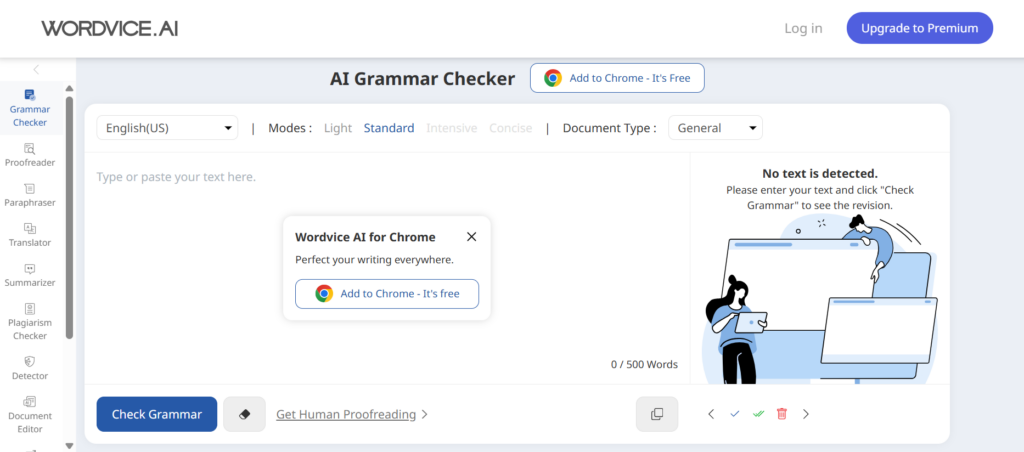
Grammar checker (Wordvice AI)
A grammar checker is helpful when you need to polish proposals, emails, or client deliverables. It helps you maintain professional communication without spending extra time editing.
Time tracking and invoicing (Harvest)
Harvest helps track hours, generate invoices, and monitor project budgets. It’s ideal for freelancers who manage multiple clients and need a clear record of their billable time.
Project management (Asana)
Asana keeps your tasks, deadlines, and client projects organized in one place. It’s helpful in tracking progress and avoiding missed details. It’s also a great tool to lean on if you’re hiring freelancers to help you sometimes — or if you want to scale to an agency as a business owner.
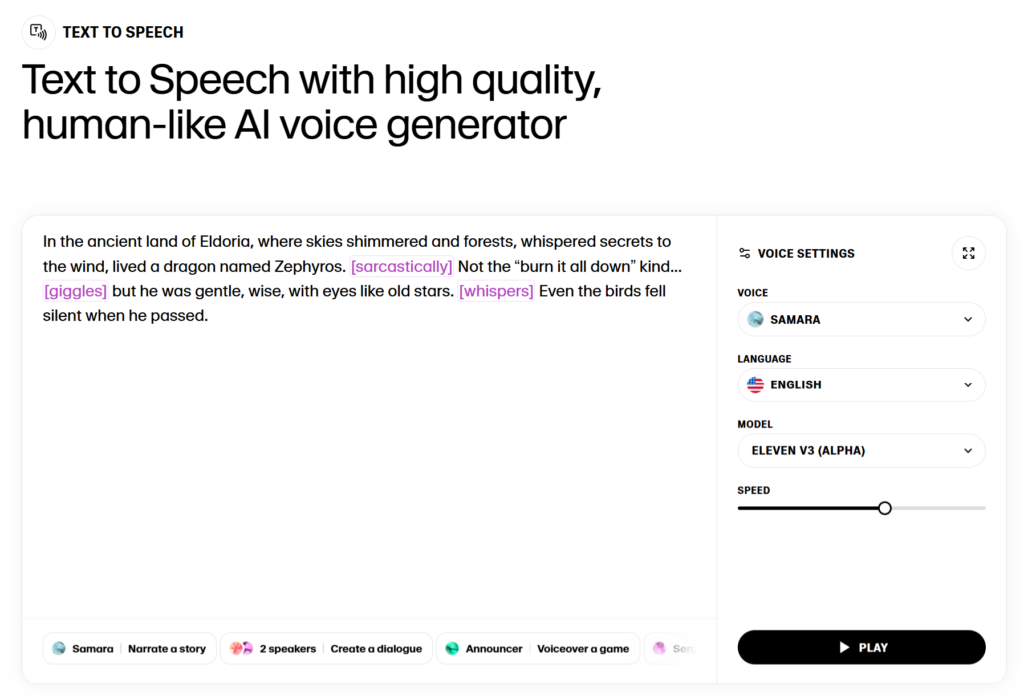
Text-to-speech tool (ElevenLabs)
Reading text aloud is one of the best ways to catch copy mistakes if you’re a freelance writer. (Or if you’re creating proposals or marketing campaigns.)
A text-to-speech tool lets you review drafts quickly and is also handy if you’re working on multimedia or accessibility projects.
Design collaboration (Canva)
Canva makes it easy to create graphics, presentations, and marketing assets in your unique art style, without advanced graphic design skills. It’s also helpful for quick mockups to share with your clients.
Cloud storage (Dropbox)
Dropbox gives you a secure way to store and share large files with clients. It also keeps your work backed up and accessible from anywhere. Great for freelance photographers.
Wrap up
To sum up: Co-ops can give you community, shared resources, and sometimes stability that’s hard to find when freelancing alone. However, they can also come with trade-offs, such as slower decision-making and revenue sharing.
Going solo, on the other hand, gives you total freedom to set your rates and scale on your terms — though it also means every responsibility lands on your shoulders.
Personally, I lean toward the solo route, supported by tools and lighter “co-ops” that send me leads and save me time. It’s a happy middle.
That’s why I recommend trying SolidGigs.
If you want ongoing and high-quality freelance opportunities, SolidGigs keeps fresh leads flowing into your inbox, so you can focus less on hunting and more on building the business you want.
Give it a try to see what it’s like! Just set your preferences and the lead generation tool will do its thing.
FAQs: Co-op or solo freelance
What’s the main difference between a co-op and solo freelancing?
A co-op offers shared resources, benefits, and community, while solo freelancing gives you full control but also full responsibility.
Do co-ops take a percentage of my income?
Formal co-ops may pool or redistribute income. Informal ones (like lead-gen tools or job boards) usually charge a flat fee or subscription.
Can I join a co-op and still freelance on my own?
Yes. Many freelancers mix the two — using a co-op for support while still running their own business independently.
Are co-ops legal entities?
Formal co-ops are registered business entities, which means more structure, compliance, and paperwork. Informal co-ops are often just communities, tools, or newsletters.
Which is better for beginners?
If you’re just starting out, informal co-ops can give you leads and support, without a heavy commitment. Once your freelance business grows, a formal co-op may make sense for benefits like healthcare or legal help .
Can I switch between co-op and solo freelancing later?
Absolutely. Freelancing is flexible. You can leave a co-op, join one later, or run both at the same time, depending on your needs. Read the fine print to know what you’re agreeing to.
How do co-ops handle disputes between members?
Formal co-ops usually have bylaws and processes for resolving conflicts. Informal co-ops rely on community norms or admin mediation.
Do I need special skills to join a co-op?
Not usually.
Most co-ops welcome freelancers at various experience levels. Though some formal co-ops may expect members to have certain expertise or a portfolio that gets approved.
Can co-ops help me get long-term clients?
Yes. Many co-ops provide job boards, client referrals, or pooled contracts, which can lead to ongoing projects and a more stable income. But they also take a percentage of your earnings.
About the author: Ivana Drakulevska
Ivana Drakulevska is a Sr. SEO and PR with a flair for writing for the web. When she is not optimizing content, she’s chasing after her overly opinionated pup or navigating the city on two wheels, proving that life is much more delightful on a bicycle. A relentless advocate for green politics, she believes marketing can be a force for good (because the planet deserves better branding).
One more thing...
You didn't start freelancing to spend hours every week searching through job boards. You started freelancing to do more work you enjoy! Here at SolidGigs, we want to help you spend less time hunting and more time doing work you love.
Our team of "Gig Hunters"—together with the power of A.I.—sends you high-quality leads every weekday on autopilot. You can learn more or sign up here. Happy Freelancing!