



In this article:
- Make the Value Clear Before Explaining the Expertise
- Show Enough Past Work to Make Custom Services Feel Concrete
- Make the Next Step Easy to Understand and Low-Friction
- Use Comparisons to Answer the Questions Prospects Are Already Asking
- Guide Unsure Prospects Toward the Right Service
- Final Thoughts
The freelance work landscape is evolving rapidly, and the independent employment model is becoming ever more popular.
According to Statista, the number of gig workers in the US is expected to reach 86.5 million by 2027 , accounting for just over 50% of the total workforce.
For established experts with a steady roster of clients, this expansion may not mean much change. But for those whose revenue depends on a steady stream of new clients, increased competition could pose a significant obstacle to achieving professional freedom.
In addition to adopting the right freelance marketing strategies to land your ideal clients, it’s equally important to create an online presence that attracts leads and differentiates your offer. And that starts with a conversion-optimized website.
So, what does it take to create a high-converting website for your freelance services? This guide looks at the best lessons independent professionals can learn from their colleagues or established brands to maximize the chances that every proposal delivers a positive outcome. Let’s dig in.
Make the Value Clear Before Explaining the Expertise
When deeply invested in a field, especially as an expert, it can be easy to lose track of how much regular people actually know about what you do. And while it’s easy to forget, your clients are most likely to be ‘regular people.’
Sure, they might have a generalidea of what they need. But if they knew the tactics needed to implement to reach their goals, they’d most likely do the job themselves (or hire an in-house team member to do it full-time).
In many cases, a lack of niche expertise among your target audience isn’t necessarily an obstacle to conversion. After all, serious clients will hire outside help preciselybecause they understand there’s someone more qualified than themselves to resolve a specific pain point. Nevertheless, focusing too much on the technical details of what you do couldbe preventing your ideal customers from understanding the unique value you offer.
You Deserve Better Clients...
We can help you find them. Just send us the details and we'll hunt down leads that match your business needs. All on autopilot.
Think about it from this point of view. A freelance website exists to help prospects understand the outcomethey could unlock by converting. And the way to achieve that is through customer-focusedclarity.
First-time web visitors don’t care about your methodology or credentials (at least not primarily). What they do care about is knowing whether the benefits you deliver align with what they need.
In fact, if you look at research on the connection between conversion rates and content accessibility and readability, you’ll find that easy-to-understand landing pages regularly convert better than their jargon-filled, high-word-count counterparts. Data from Unbounce shows that landing pages with user-friendly copy convert over 24% higher than their complex counterparts.
So, the goal for your freelance website is simple. Make the value you offer crystal clear before getting into the technical details of what you do. The best way to do this is to frame your services as customer benefits or outcomes, an approach that elevates engagement rates and gives prospects a reason to keep reading.
Once you’ve established the unique value you can deliver to prospects, you can then provide detailed proof of your expertise. After all, simplicity and attention to (technical) detail aren’t opposites. Rather, they demand a healthy balance. The first layer is there to create accessibility. The second, proof layer gives web visitors the details they need to make an informed conversion decision.
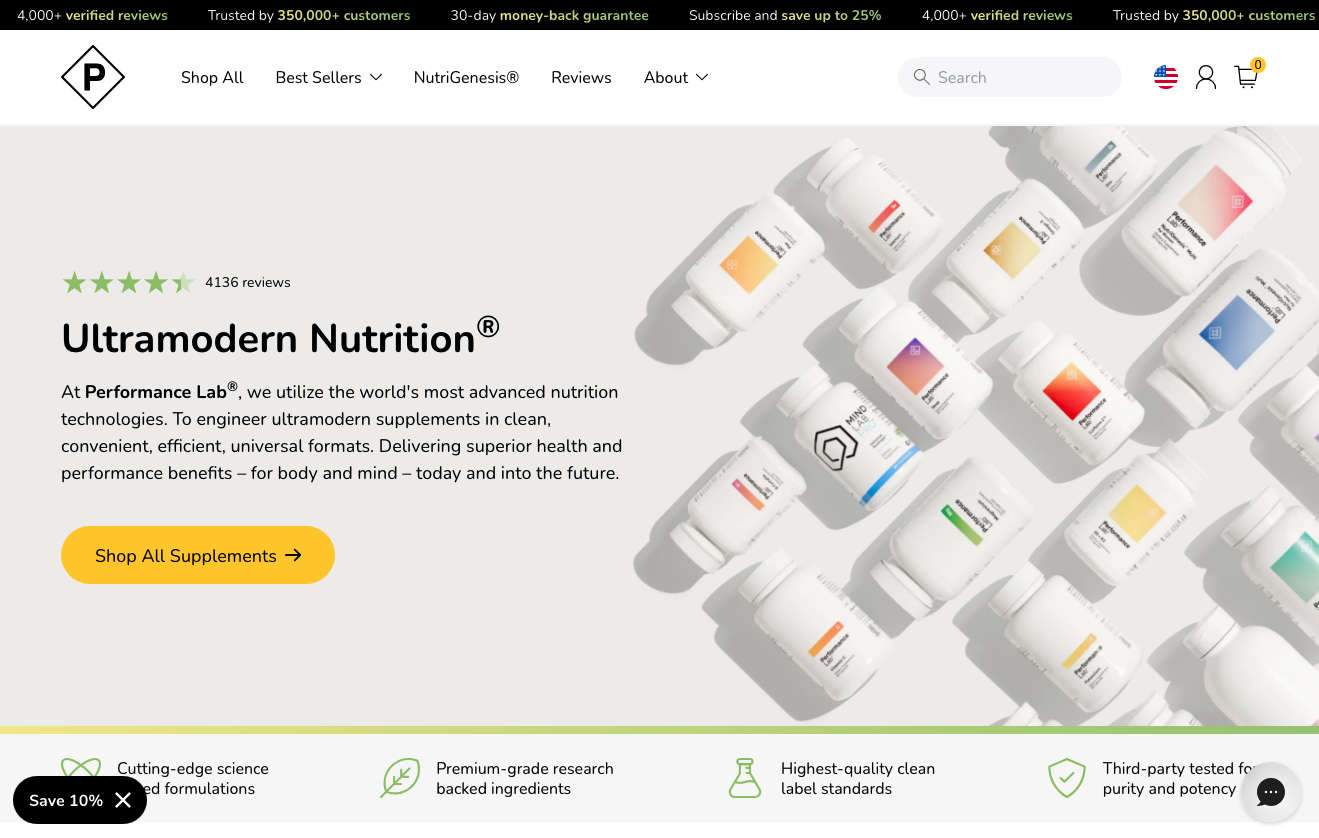
If you check out Performance Lab, you’ll see precisely what this approach looks like in real life. This cutting-edge supplement brand positions its value as “superior health and performance benefits — for body and mind.” And it works. These promises are easily comprehensible to all of the brand’s web visitors, regardless of their health and wellness expertise.
The brand provides plenty of technical detail for those ready to take a deeper dive into what makes Performance Lab’s solutions stand out. With content explaining its ingredients and formulations, the business communicates everything buyers need to know about the technical specifics of its products. Yet, with the initial simplicity, it ensures that non-expert shoppers don’t feel out of their depth and are ready to continue exploring its offer to learn more.
Source: performancelab.com
This is an approach that you can easily implement on your freelance website as well.
Start wide. Tell web visitors what you do and what benefits your services can deliver. Once you’re sure they understand your value proposition, you can get into the details about your expertise, methodology, or credentials. But the only way those are going to engage prospects and inspire conversions is if your target audience already knows that you can deliver the outcomes they’re after.
Show Enough Past Work to Make Custom Services Feel Concrete
When making buying decisions, most customers need proof of effectiveness before committing to a purchase. This is true across all verticals (with data showing that 99.5% of end-consumers read reviews before buying). But this is especially true in the B2B sector, where a poor buying decision can have consequences that go beyond just financial risk.
Now, the most common way to back your claims is with social proof.
As a highly credible type of user-generated content, this format is exceptionally effective at building trust and establishing expertise. Most shoppers naturally seek it out during the mid-to-low stages of the sales funnel.
However, the primary goal of your freelance website isn’t just to prove your competence. It’s equally essential to showcase your past work, your future clients’ only insight into what they can expect to get from your business.
Remember, prospects can’t see their exact future website, campaign, illustration, or strategy before buying. So asking them to make a conversion decision requires them to take on a huge risk.
By showcasing your portfolio, you can:
- give leads an overview of your previous work
- introduce them to the unique characteristics of your work and style
- help them understand the outcomes they can expect to get when investing in your services
- give them a better idea of the types of projects you’ve successfully handled in the past, which is an important factor for clients operating in unique or uncommon niches
A good rule of thumb for showcasing your portfolio is to organize your past projects so visitors can choose to browse relevantexamples of your work. Whether you categorize your portfolio by style, industry, or deliverables depends on the type of services you offer. What matters is that your digital presentation is well-organized, enjoyable to browse, and gives future clients a great taste of what to expect from your services.
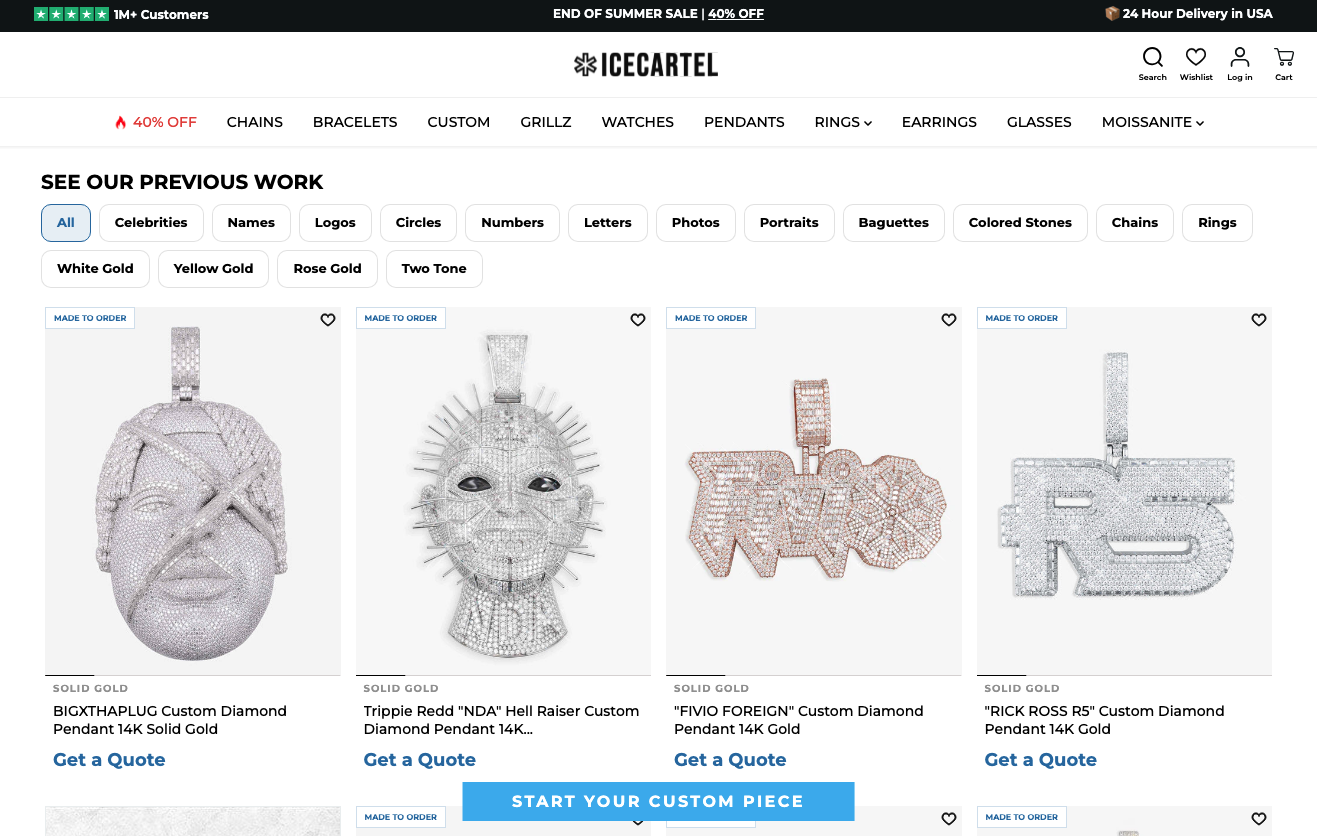
IceCartel’s page showcasing the custom chains and pendants the brand has designed and made for its clients is an exceptional example of this approach from a high-converting website. The pieces are shown through highly detailed imagery and several secondary images.
However, what makes the strategy conversion-optimized is the amount of information IceCartel provides for each of its past creations. It says whom each piece was crafted for and provides details about the materials and techniques used. And it even includes ‘Get a Quote” CTA buttons, inviting potential customers to send an inquiry about acquiring something similar for themselves.
Source: icecartel.com
Freelancers wanting to showcase past work should take a similar approach.
A good rule of thumb for making your website effective at inspiring visitors to convert is to:
- show off a wide variety of projects to potential prospects
- give them the option to explore and interact with each of your past projects
- allow filtering based on relevant factors in your industry
This will ensure potential prospects understand what you can do for them, rather than forcing them to browse multiple examples that don’t relate to their specific wants and needs.
Make the Next Step Easy to Understand and Low-Friction
One of the biggest conversion killers on most sites is the lack of a clear, frictionless call to action.
Yes, hyper-relevant value propositions followed by content that showcases your expertise can generate genuine interest among website visitors. But if you don’t make it clear what they need to do to secure the benefits you offer (and what your process looks like), they’re most likely to leave your website and hire one of your competitors.
But why are clarity and expectation managementso important for conversion optimization?
First and foremost, it’s important to understand that uncertainty directly harms purchase intent. It triggers risk-averse prospects’ fears; on top of that, research shows that it can even lead to a complete abandonment of the buyer’s journey.
In fact, if you look at some of the reasons ecommerce shoppers abandon their carts, you’ll find that information gaps are some of the main culprits. For example, according to the Baymard Institute, a significant number of people won’t complete a purchase if they can’t see the shipping costs upfront.
The best conversion optimization method to overcome this obstacle is to empower your potential leads with sufficient information about your offer and process.
Be explicit about what you can do for your clients. More importantly, clearly state what web visitors need to do to initiate the hiring process. Is it scheduling a consultation? Requesting a quote? Do they need to complete a form for you to consider their project? Or do they need to select one of your packages?
Clear button copy and sufficient informationabout how your services work are usually enough to remove potential conversion friction and remove uncertainty.
It’s equally important to ensure the complexity of your conversion process aligns with your visitors’ stage of the consideration.
After all, a lead just inquiring about what you could do for them most likely won’tbe ready to choose from one of your several pricey packages (especially if they require a long-term commitment). They’ll be much more comfortable with the idea of getting in touch for an initial discussion.
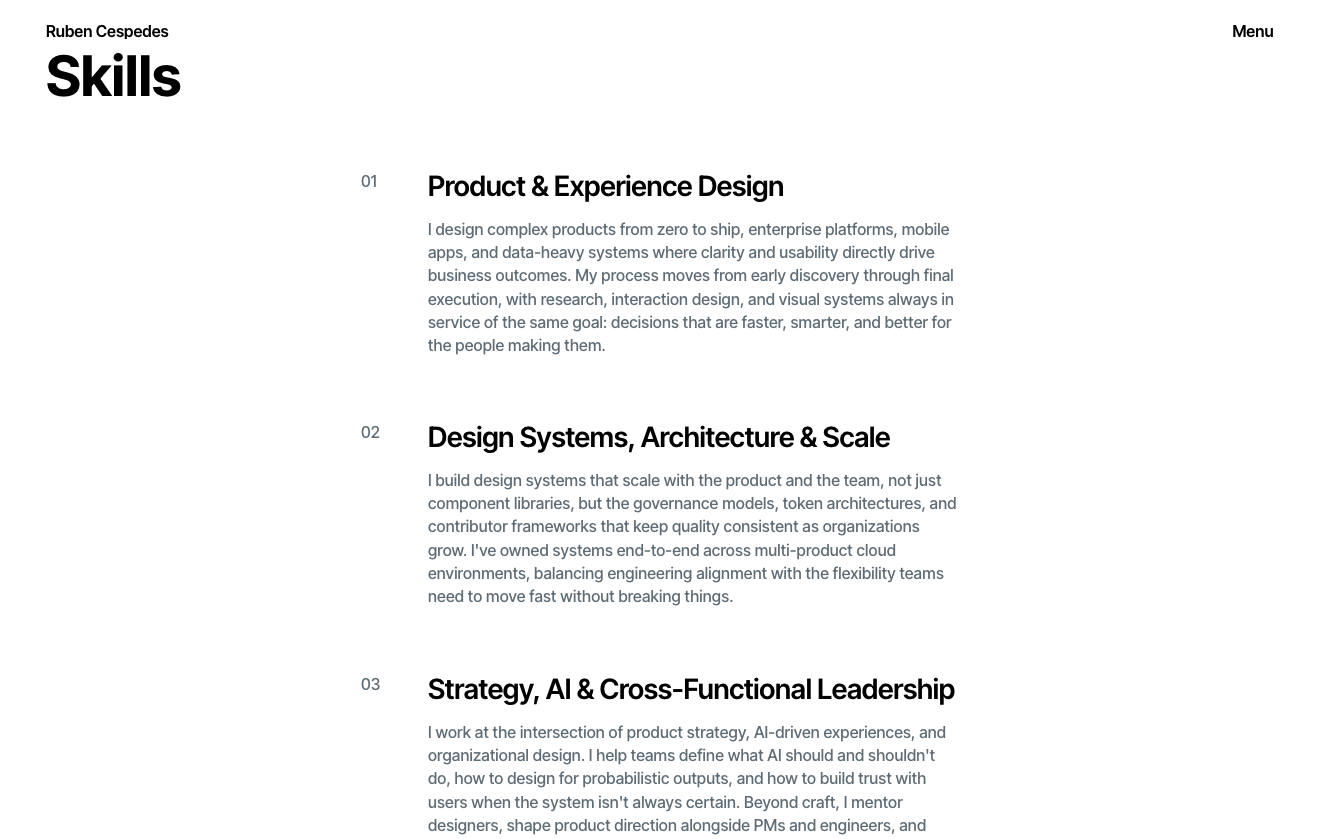
Ruben Cespedes is a freelancer whose website takes all of these factors into consideration. Knowing that his expertise is highly sought after and that his availability is limited, this professional does his absolute best to use his website to clarify what type of work he can take on.
This includes detailed explanations of what each of his services looks like. Plus, his CTA makes it clear that potential clients can get in touch with collaboration ideas to “see how [they] might work together.” This approach almost entirely removes risk. Yet, it still inspires clients to reach out, mainly thanks to the elaborate Skills section of the website, where Cespedes clearly outlines all the benefits of his tailor-made approach.
Source: rubencespedes.com
Use Comparisons to Answer the Questions Prospects Are Already Asking
Encouraging web visitors to convert requires a complete understanding of how prospects move through the buyer’s journey.
When developing their online presence, most freelancers (and businesses alike) will focus on building awareness and encouraging conversion. But that approach skips an entire step in the typical buyer’s journey: the evaluation stageof the sales funnel.
During this phase, which most people go through, shoppers compare multiple options to ensure they choose the one that fits their unique needs. According to research conducted by RTB House, 78% of consumers evaluate three or more options before committing to a purchase.
The goal of this activity isn’t necessarily to find the bestoption for handling a customer’s needs. It can be just as well to filter out providers that aren’t a good fit. So, by including clear comparison content in your online presence, you can turn your freelance portfolio website into an objection-handling tool.
The best way to approach this type of conversion-driving content is to identify your ideal customers’ primary decision-influencing factors. Answer their questions (i.e., why working with a freelancer is better than hiring an agency or using a DIY approach). Compare meaningful differences between youroffer and its alternatives.
You can focus on a variety of differentiation factors, whether that includes your process, flexibility, guarantees, or commitment to customer support.
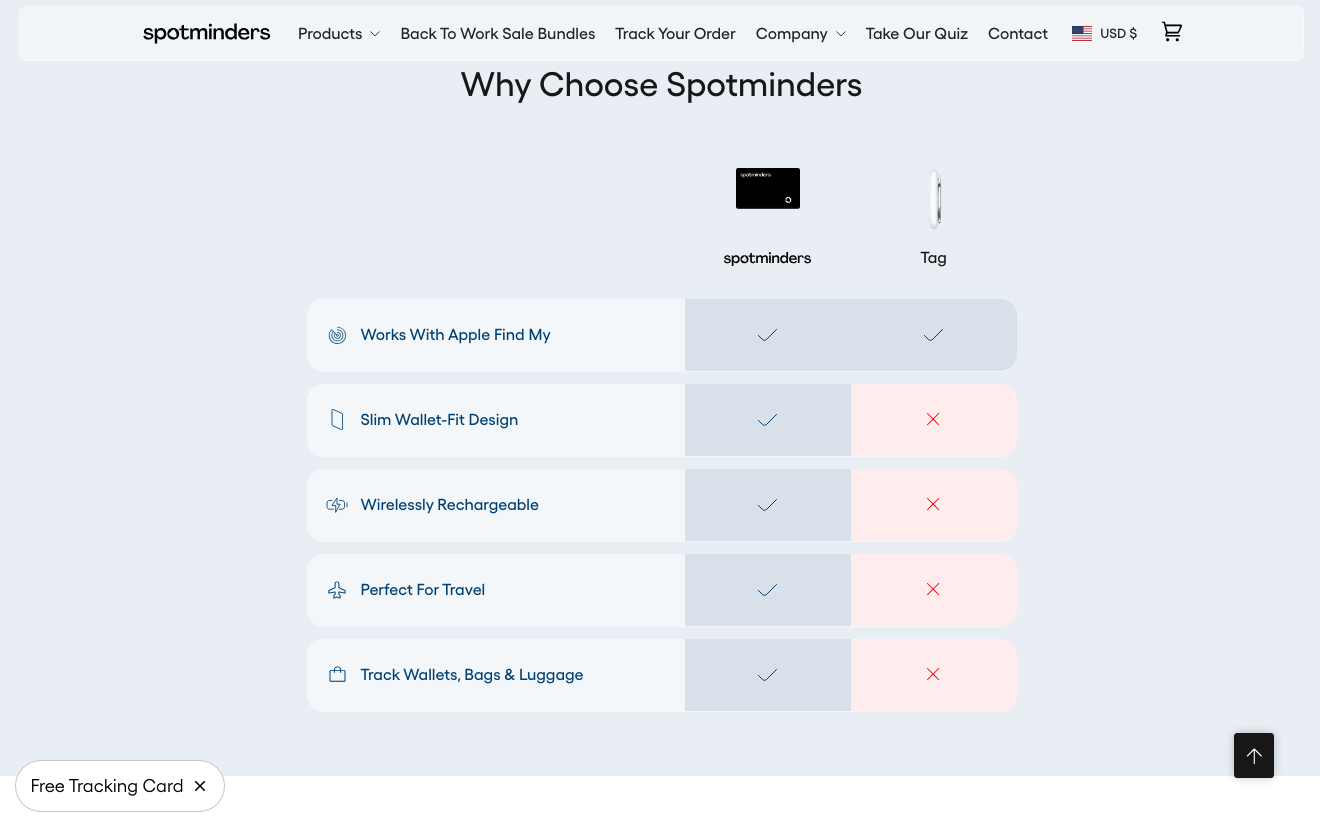
Spotminders is an excellent business to take inspiration from. On its homepage, this brand compares its tracking card to its most popular alternative, the Tag. Note how it pins the two options side by side for easy comparison. And notice how it prioritizes concrete product attributes it knowsits ideal customers care about.
Ultimately, Spotminders may not be able to take on one of the biggest names in its industry based on brand reputation alone. Nevertheless, the brand ishyper-aware of the benefits of its solution over the alternatives, including the products’ design, specifications, certifications, and versatility.
Source: spotminders.com
As a freelancer, you can do something very similar to this brand.
You don’t need to prove that your services are superior to businesses or agencies that dominate your field. Instead, do your best to differentiate yourself based on the factors that make youroffer unique.
This can include a host of things, and what matters to clients can hugely vary. Remember, many clients preferworking with a smaller team, as the choice gives them a higher likelihood of receiving next-level support. Furthermore, many brands seeka unique style when hiring designers or copywriters because this gives them the valuable opportunity to stand out from their competitors.
So, identify your unique value factors, and don’t be afraid to pit them against alternative options. The inquiries you’ll get are far more likely to end in a conversion than those from web content that doesn’t position you as the perfect choice for yourtarget audience.
Guide Unsure Prospects Toward the Right Service
Finally, when optimizing your freelancer portfolio website for conversions, it’s important to understand that many of your prospective clients won’tknow what they need to solve their needs.
Sure, web visitors may have a general understanding of their pain points and even a vague idea of the type of solution they need to remove it. But if they’re dealing with a niche field, their lack of industry insights is practically guaranteed to negatively impact their conversion potential, especially if they have to handle professional terminology or choose between technical factors while evaluating their options.
One way to remove this conversion killer from your website is to optimize for value clarity. However, if you knowyour target audience needs help identifying the ideal solution for their needs, it’s not a bad idea to guide them toward the right service(which will exponentially boost their likelihood of converting).
You can do this with project-fit quizzes, package selector pointers, style finders, or needs assessments that ask potential clients a series of questions about their goals and preferences.
The goal of these tactics isn’t to push leads to convert. That approach rarely ends with a positive outcome. Instead, the idea is to show your leads that you’re willing to take the time to help them figure out what they need. It’s a relationship-building tactic that drives trust and creates a preference for hiring youover an agency that just wants their hard-earned money.
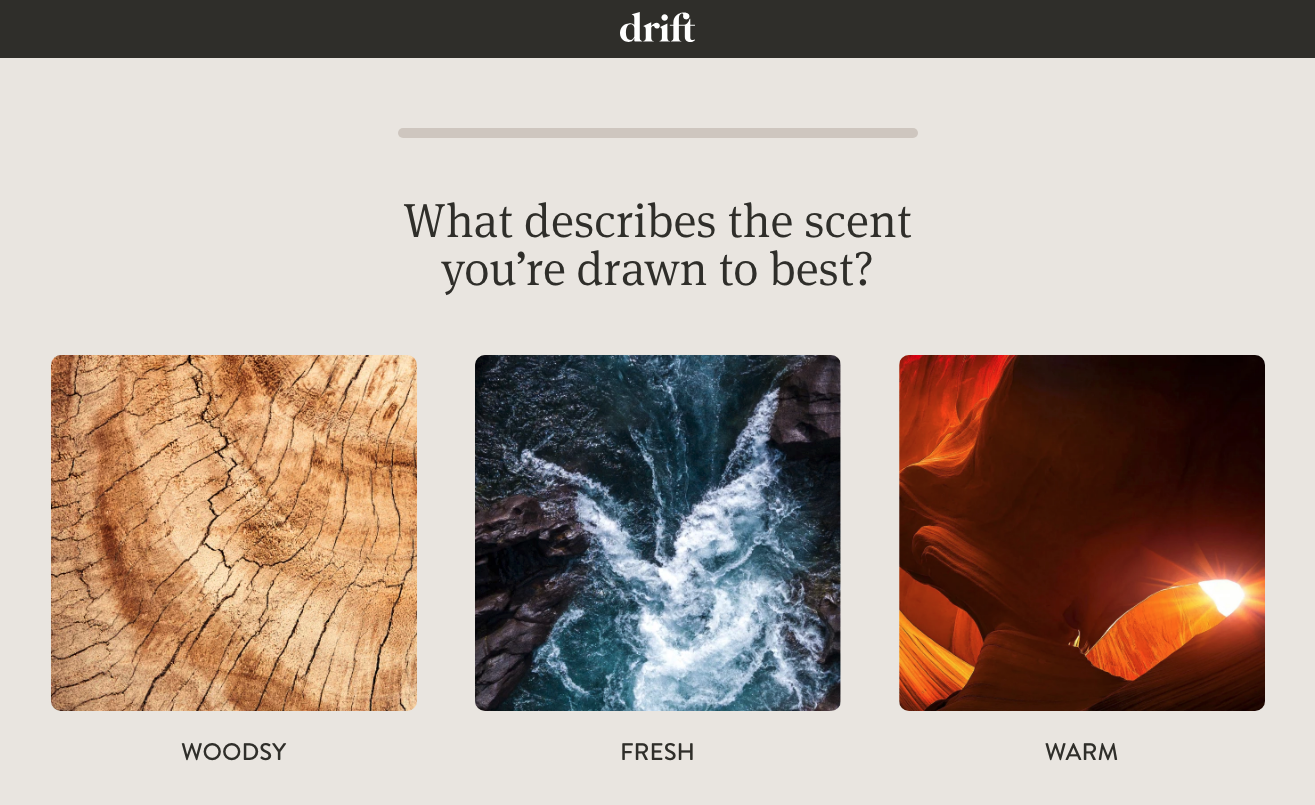
For example, if you check out the Drift homepage, you can see what this strategy looks like in the ecommerce industry.
This brand understands that its customers may not be aware of their scent preferences, a significant conversion obstacle. So, to make web visitors more comfortable with the idea of buying a home scent diffuser , Drift encourages leads to take a scent quiz.
The questionnaire is short and simple. But by identifying prospects’ preferences, it creates an informed prediction regarding what scents they’d most likely enjoy, guiding qualified leads toward the best products to solve their pain points and maximizing their likelihood of clicking the ‘buy’ button.
Source: drift.co
You can easily recreate something like this on your freelance portfolio website. Or, you can choose a much simpler route by including a few core questions in your lead-generation forms.
Ultimately, by aligning your offer with your potential customers’ exactneeds, you don’t just unlock the opportunity to position your offer as relevant. Much more importantly, this approach makes your leads perceive you as a professional who understands nuance, a trust-building factor that’s highly likely to boost their purchase intent if they’re truly looking for the best person to handle their needs.
Final Thoughts
Securing more clients as a freelancer doesn’t have to be rocket science. In fact, finding high-quality leads can be exceptionally easy with the right support. And our Gig Hunters can help youget started right away.
Nevertheless, to win those gigs and stand out from your competitors, a conversion-optimized portfolio website is non-negotiable. The tactics discussed in this guide are all excellent ways to guide your leads closer to a purchase decision. So, give them a go. You’re sure to see a boost in inquiries.
One more thing...
You didn't start freelancing to spend hours every week searching through job boards. You started freelancing to do more work you enjoy! Here at SolidGigs, we want to help you spend less time hunting and more time doing work you love.
Our team of "Gig Hunters"—together with the power of A.I.—sends you high-quality leads every weekday on autopilot. You can learn more or sign up here. Happy Freelancing!